Large Yard Health Benefits for Kids: Evidence, Safe Play, and Backyard Design
Families often assume that buying a home with land automatically means healthier kids. That’s not how it works. The real advantage of a large yard (including one‑acre lots) is simpler: it expands what’s *feasible* on an average weekday—more outdoor time, more movement, and more nature-based play—if the space is designed and used on purpose.
Why outdoor space can be a real health asset
Kids and teens need consistent opportunities to move. The **baseline target** is not negotiable: children and adolescents ages 5–17 should do **at least 60 minutes per day** of moderate-to-vigorous physical activity.
A large yard can lower friction. When the “play environment” is steps from the door, you can turn small time windows into meaningful outdoor time: a 20‑minute post‑school break, a quick soccer game before dinner, or a weekend garden project that keeps everyone moving.
But acreage isn’t the outcome. **Use is the outcome.** Which means your yard needs to compete with screens, homework, and tight schedules.
Physical health benefits parents actually care about
A yard that gets used most days can support health in three practical ways:
**More daily movement.** Open space allows running games, biking, throwing, and free play that’s hard to replicate indoors.
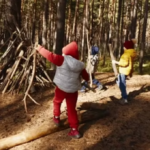
**More movement variety.** Natural elements—logs, boulders, uneven terrain—encourage climbing, balancing, jumping, and digging. That variety matters because kids build competence by practicing many kinds of movement, not just steps.
**More “default activity,” less sitting.** The goal is not to build an elite athlete. The goal is to make being outside the easiest option.
Mental health, attention, and “decompression” benefits
Parents often miss this: outdoor space isn’t only about burning energy. It’s also about regulation. Many kids come home overstimulated and drained; a calm outdoor routine (even short) can be a reset before homework, dinner, or bedtime. The key is adding a yard feature that encourages quieter engagement—shade, a bench, a hammock corner, or a garden zone—not just a wide-open lawn.
Social development, independence, and resilience
A bigger yard can help kids practice independence in a controlled environment. If you set clear boundaries and age-appropriate rules, kids can roam, explore, build, and problem-solve with less adult micromanagement. That autonomy is where confidence and resilience get built—assuming hazards are controlled.
What kids can do in a big backyard that small yards can’t easily support
High-impact, repeatable activities that work well on large properties include:
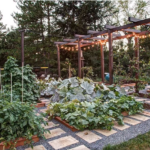
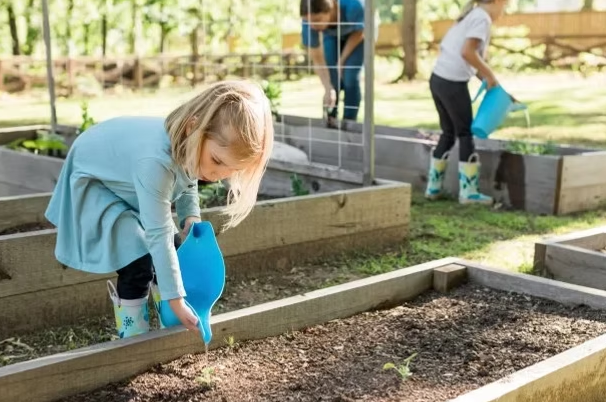
– **Garden beds and “edible chores”** (watering, harvesting, composting)
– **Nature play zones** (logs, sticks, rocks, loose materials)
– **Exploration paths** (mowed loops for scooters, bikes, and “laps”)
– **Mess-friendly play** (mud kitchen, digging area, sensory play)
– **Simple sports space** (a small field beats a perfect lawn)
The design principle is straightforward: **zone the yard** so it offers multiple “reasons” to go outside.
Safety and supervision rules that prevent serious harm
More land can also mean more hazards. If there is one non-negotiable, it’s water safety. The CDC recommends **fully enclosing pools with four-sided fencing** (at least 4 feet high) with self-closing and self-latching gates to separate the pool from the home and yard.
Next, treat chemicals like a risk, not a lifestyle convenience. The American Academy of Pediatrics notes that children are widely exposed to pesticides in homes and yards and that pesticides can be toxic. If your yard is a play space, use the least-toxic approach possible and reduce pesticide use where kids spend time.
Backyard design tips that maximize “outdoor time ROI”
If you want the yard to function as a health asset, don’t build a museum. Build a system:
– Put the best features close to the house (fast access wins)
– Create a loop path (kids love circuits)
– Add shade and seating (outdoor time needs comfort)
– Mix open space with natural features (variety drives repeat play)
– Keep rules simple (boundaries + check-ins + hazard control)
Acre-plus properties can be genuinely beneficial for kids—but only when families treat outdoor time as a routine and design the yard for daily, practical use.
If your looking for an Acre + property call:

Jake Kilts
630. 487.1896